Robot programming
Pick and place, machine tending, palletising and process sequences. Tool frames, work coordinates, I/O logic and offline preparation.
Plan a robot program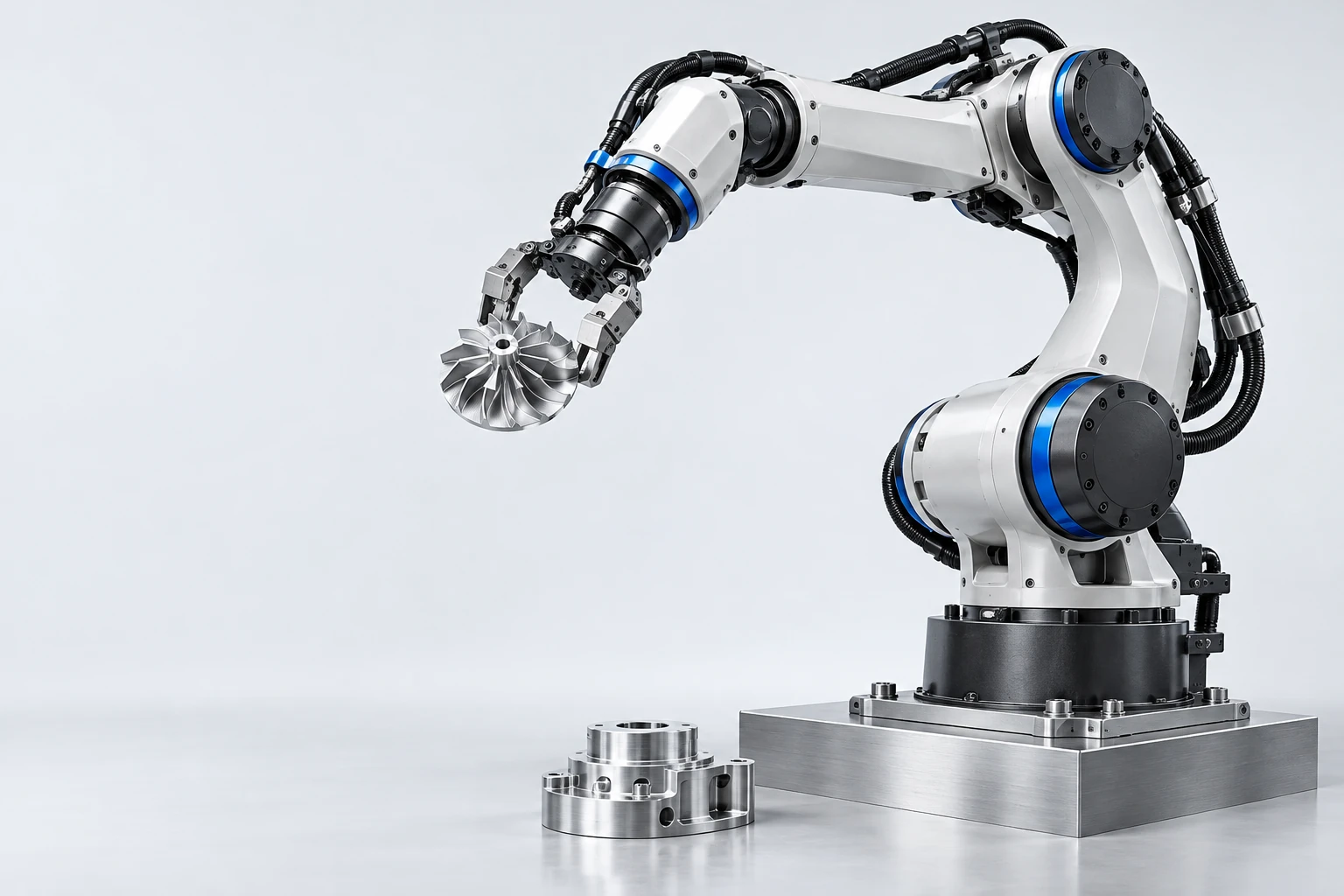
Precision machining. Intelligent robotics.
The programs that bring them together.
Geometry, material and quality requirements define the process. Start with what matters to your component.
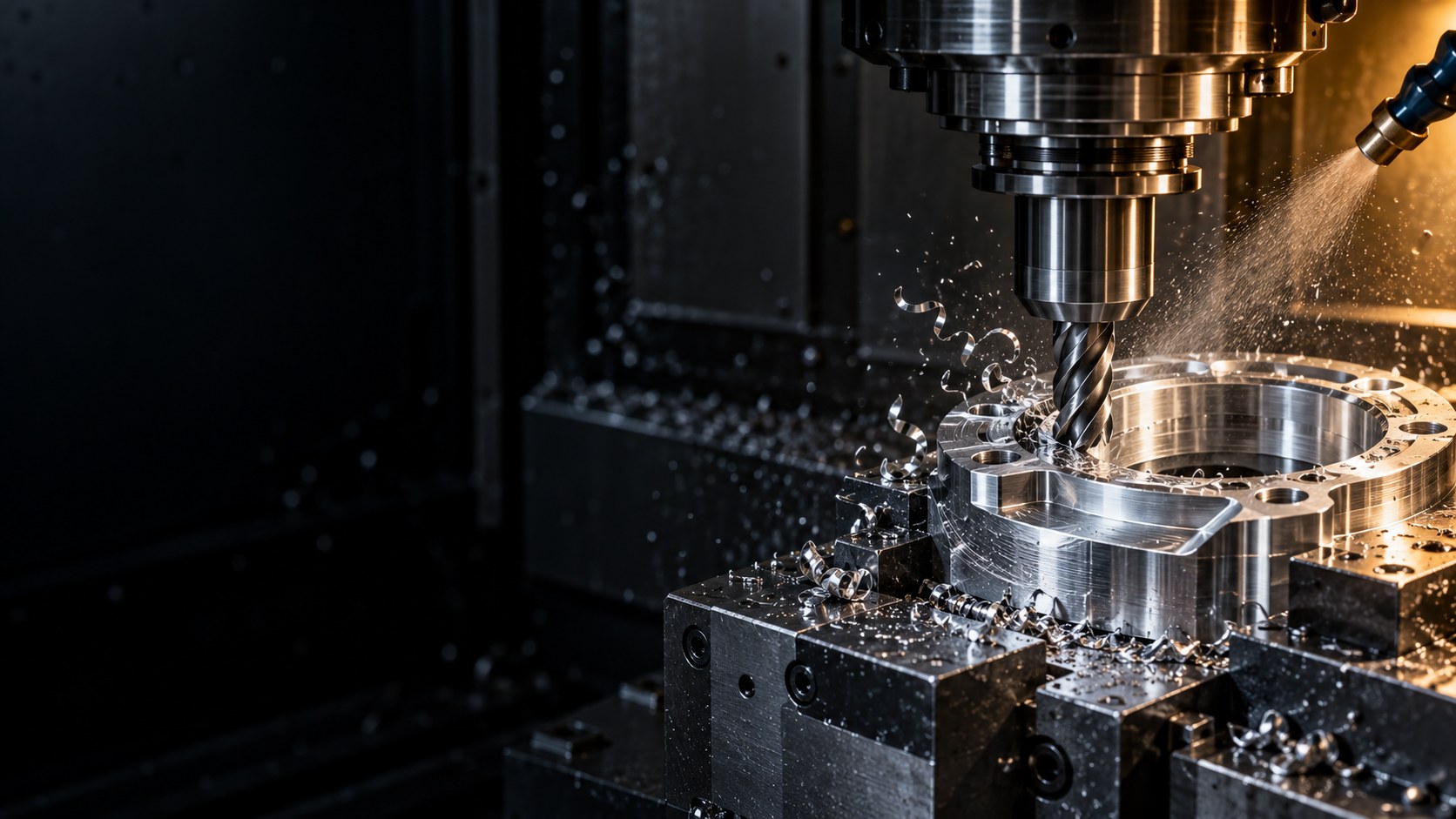 CNC / MILLING
Planes, pockets, slots and contoured surfaces. Define datums, critical dimensions and tolerances to establish the right machining approach.
Prepare a machining briefMaterials, tolerances, batch size and process availability are confirmed after reviewing your documentation.
A robot arm is part of a bigger system. Define the workspace, load and operation to lay the groundwork for the right solution.
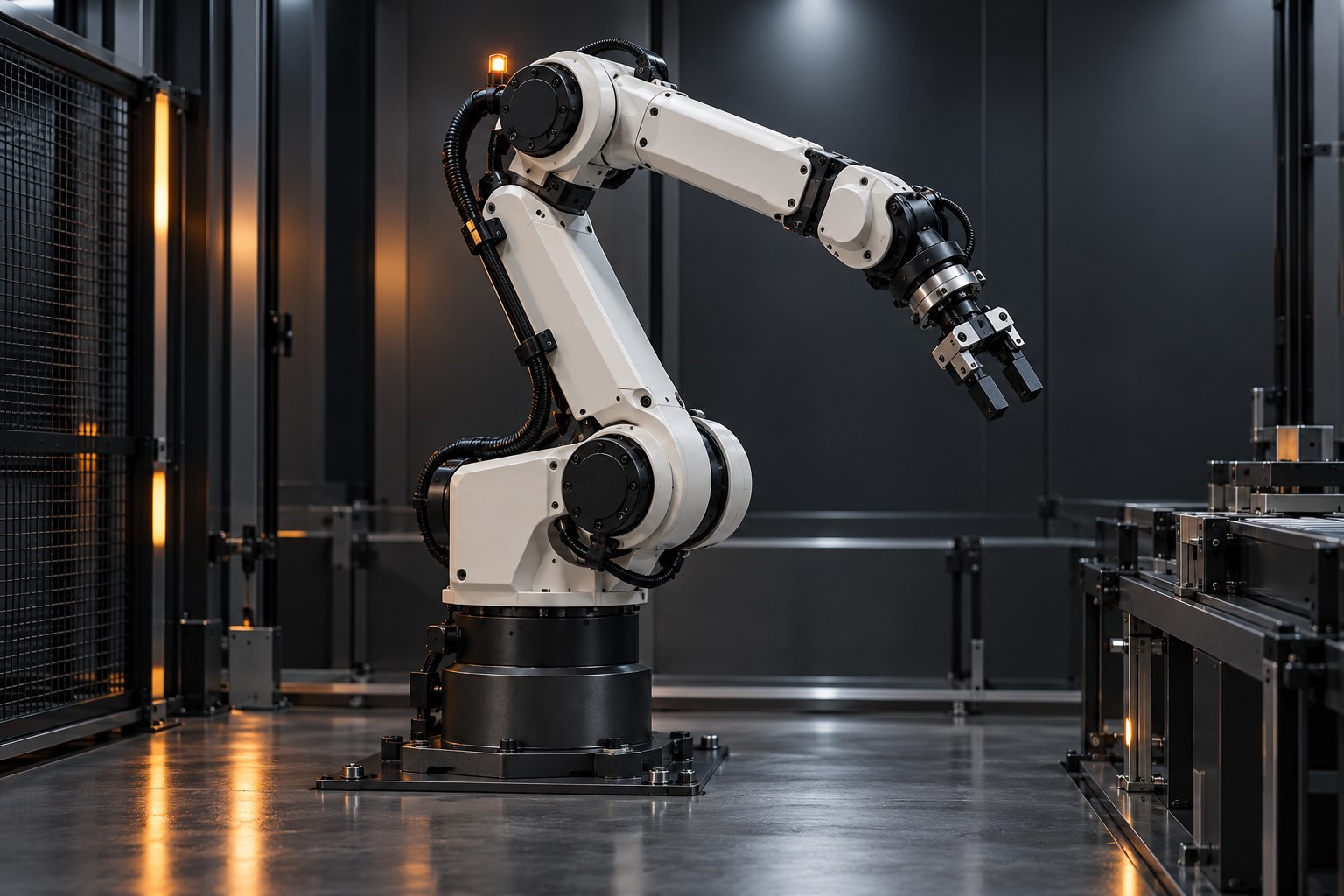
Robot, gripper, machine interface and workspace safeguarding.
These parameters describe your requirements. Robot model, tooling and cell design require an engineering assessment.
Programs built around your part, your controller and your production process. From a digital model to a considered motion sequence.
DEFINE tool = gripper
SET reference = workpiece
MOVE approach_pick
GRIP part
MOVE transfer_clearance
MOVE approach_place
RELEASE part
RETURN homeIllustrative motion study. Not a collision or safety simulation.
Pick and place, machine tending, palletising and process sequences. Tool frames, work coordinates, I/O logic and offline preparation.
Plan a robot programTurning and milling strategies, toolpath preparation, setup documentation and postprocessor development or adaptation for the agreed controller.
Plan a CNC programSource data → Program development → Digital verification → Machine validation
Software, controller compatibility, deliverables and on-machine validation are agreed per project.Housings, shafts, mounting and locating components. Loading blanks, unloading finished parts and transferring workpieces between operations.
Outline your projectEnclosures, mounting plates and process fixtures. Positioning, assembly and component handling applications.
Outline your projectCase palletising, product handling and packaging operations. Define the load weight, dimensions and required cycle time.
Outline your projectComponents for machinery, adapters and application-specific tooling. Welding, processing and robot integration into a production area.
Outline your projectIllustrative applications. Feasibility is assessed individually for each project.
Share a drawing or process description, material, quantities, schedule and critical requirements.
Review the inputs, clarify constraints and establish a suitable technical approach.
Confirm the specification, acceptance criteria and project terms.
Work to the agreed plan, reviewing requirements at key project milestones.
A precision component, a robotic cell or the program behind it. Tell us what you need to make possible.
Start with a clear briefDownload your project brief and keep it ready for a conversation with MIXAX.
A 3D model and drawing showing critical dimensions, material, tolerances and surface requirements. Include quantities, operating conditions and your target schedule. If you do not have a model, describe the information available in your brief.
Include the weight of the part and tooling, including the gripper. Engineering selection also requires the centre of gravity, motion path, cycle time and workspace layout.
This website helps you prepare a project brief. Pricing, lead times, process availability and equipment selection require a project review. There is no automated cost estimate. For programming, include the machine or robot model, controller, process, source files and expected deliverables.
Download your brief and email it together with your drawings to mail@mixaxrobotics.com. The form itself does not send emails or upload documents.
Robot motion sequences, offline programming, CNC toolpaths, CAM preparation and postprocessor work can be scoped around your equipment. Controller compatibility, simulation inputs and commissioning requirements are agreed for each project. All machine programs require validation on the actual equipment before production.